Make Homemade Pasta Easy: The Simple 3-Ingredient Recipe
For too long, the idea of making fresh homemade pasta has been shrouded in a mystique of culinary complexity. Visions of professional kitchens, specialized equipment, and endless hours spent slaving over finicky dough often deter even enthusiastic home cooks. But what if we told you that creating incredible, fresh-from-scratch pasta could be shockingly simple? Forget the elaborate formulas and intimidating ingredient lists you might find online. We're here to share a culinary secret: you can make delicious homemade pasta with just three humble ingredients, proving that rocket science truly has no place in your kitchen. This isn't about cutting corners; it's about embracing efficiency and unlocking the pure joy of a truly authentic pasta experience. Once you taste the difference between store-bought dried pasta and your own tender, flavorful creation, you'll wonder why you ever waited! If you've been hesitant to dive into the world of pasta making, prepare to be pleasantly surprised at how accessible and rewarding it can be. For a deeper dive into dispelling these myths, check out our guide on Homemade Pasta From Scratch: Simpler Than You Think!The Myth of Complicated Pasta-Making, Busted!
Many "basic" fresh pasta recipes circulating the internet tend to overcomplicate things, presenting homemade pasta as an arduous task rather than an achievable pleasure. They often feature a bewildering array of ingredient choices, precise hydration percentages, and instructions so detailed they make your head spin. This is exactly the kind of culinary fuss that makes many a no-fuss cook want to throw in the towel before they even start. The truth is, while there are certainly gourmet variations and advanced techniques for pasta making, the foundation is incredibly straightforward. The goal here is to empower you to create a superior product with minimal stress. We’re stripping away the unnecessary frills to focus on the core elements that truly matter: quality ingredients and a simple, effective method. The result? A silky, golden egg pasta – or *pasta all’uovo* as Italian families affectionately call it – that rivals any you'd find in a high-end restaurant, made right in your own kitchen. It's time to demystify homemade pasta and transform it into a regular, enjoyable part of your cooking repertoire.The Magic Trio: Your 3 Essential Homemade Pasta Ingredients
The beauty of our simple homemade pasta recipe lies in its minimalist approach. You truly only need three core ingredients to achieve a wonderfully pliable and delicious dough. Each plays a crucial role in creating the perfect texture and flavor.- Flour: The Foundation
Traditionally, pasta is made from durum wheat flour, often known as semolina flour. Durum wheat is celebrated for its high protein content and strong gluten structure, which are vital for helping the pasta maintain its shape and characteristic chewiness when cooked. However, don't feel restricted if semolina isn't readily available. Regular all-purpose flour works absolutely beautifully and is what many home cooks (myself included!) use almost exclusively. It provides a tender, satisfying result that's incredibly easy to work with.
For those looking to experiment with ancient grains, I've had great success with all-purpose Einkorn flour. While Einkorn can sometimes be a bit finicky in other baking applications, it handles remarkably well in pasta dough. You can substitute it 1:1 for regular all-purpose flour without needing any other adjustments. If you prefer the hearty flavor of whole-wheat, freshly milled whole-wheat flour is also an option, though you might need to add a touch more liquid to account for its coarser texture.
- Eggs: The Binder and Enricher
Eggs are the lifeblood of egg pasta, providing not just the necessary liquid to bind the flour, but also adding richness, color, and a delicate tenderness to the finished product. While some recipes suggest using only egg yolks for an intensely rich dough, I find that using whole large eggs offers the perfect balance of ease and quality. They provide enough moisture and contribute to the dough's strength and elasticity, making it easier to knead and roll. Whether you use farm-fresh eggs from your backyard hens or reliable store-bought varieties, the quality of your eggs will shine through in your pasta.
- Salt: The Flavor Enhancer
Often overlooked, salt is far more than just a seasoning; it's an essential ingredient in your pasta dough. A small amount of fine sea salt incorporated directly into the dough enhances the natural flavors of the flour and eggs, making the final pasta taste more vibrant and complete. Fine sea salt is preferable as it dissolves and absorbs into the dough more quickly and evenly than coarser salts. While some traditional Italian recipes might include a drop of olive oil for added pliability and richness, our core 3-ingredient approach focuses on flour, eggs, and salt for a truly classic and perfectly balanced dough. For mastering the basics of this essential duo, explore our article Master Homemade Pasta: Easy Dough with Just Flour & Eggs.
Crafting Your Perfect Homemade Pasta Dough: A Step-by-Step Guide
Now that you have your three essential ingredients ready, let’s bring them together to create a smooth, elastic dough that’s a joy to work with. This recipe yields approximately one pound of fresh pasta, perfect for serving 4-6 people. Homemade Pasta Dough Recipe (Approx. 1 pound)- 2 cups all-purpose flour (or chosen flour)
- 1/2 teaspoon fine sea salt
- 3 large eggs
- Combine Dry Ingredients: In a large bowl or directly on a clean, spacious work surface, combine the flour and fine sea salt. Whisk them together briefly to ensure the salt is evenly distributed.
- Create a Well: Using your hand or the bottom of a bowl, make a deep, wide well in the center of your flour mixture. Ensure the walls of the well are sturdy enough to hold the eggs.
- Add Eggs: Crack the three large eggs directly into the center of the well.
- Gently Mix: Using a fork or your fingertips, gently begin to whisk the eggs in the center of the well. Gradually, with each stroke, start drawing in small amounts of flour from the inner walls of the well into the egg mixture. Continue this process, slowly incorporating more and more flour, until the eggs are fully mixed with flour and a shaggy, stiff dough begins to form.
- Bring Together: Once a shaggy dough has formed and it's too difficult to mix with a fork, gather the dough with your hands. It will likely be crumbly at first. Press and squeeze it together to form a cohesive ball.
- Knead the Dough: This is where the magic happens! Transfer the dough to your clean work surface and begin kneading. Push the dough away from you with the heel of your hand, fold it back over, turn it 90 degrees, and repeat. You're aiming to develop the gluten in the flour, which will give your pasta its signature chewiness and elasticity. Knead for 8-10 minutes.
- Troubleshooting Consistency: This dough will be significantly stiffer and firmer than traditional bread dough, and that's exactly what you want. However, if your dough is too dry and won't come together, add a 1/2 teaspoon of water, knead it in, and assess. If it's too sticky and clinging to your hands, sprinkle in a bit more flour, a teaspoon at a time, until it's more manageable.
- Desired Texture: As you knead, you'll notice the dough transforming. It will become smoother, more pliable, and develop a beautiful satiny consistency. If your dough still looks rough or feels resistant, keep kneading! The longer you work it, the smoother and more elastic it will become.
- The All-Important Rest: Once your dough is smooth and satiny, form it into a ball and cover it tightly with plastic wrap. This resting phase is absolutely crucial and should not be skipped. It allows the gluten to relax, making the dough much easier to roll out later. If you skip this step, you'll find yourself fighting a very springy and difficult dough. Let it rest at room temperature for at least 30 minutes, or up to an hour.
From Dough to Delight: Rolling and Shaping Your Fresh Pasta
Preparing for Rolling: Once rested, divide your dough into four equal portions. Lightly flatten each portion into a small, thick disc. Lightly dust your work surface and the dough portions with flour to prevent sticking.
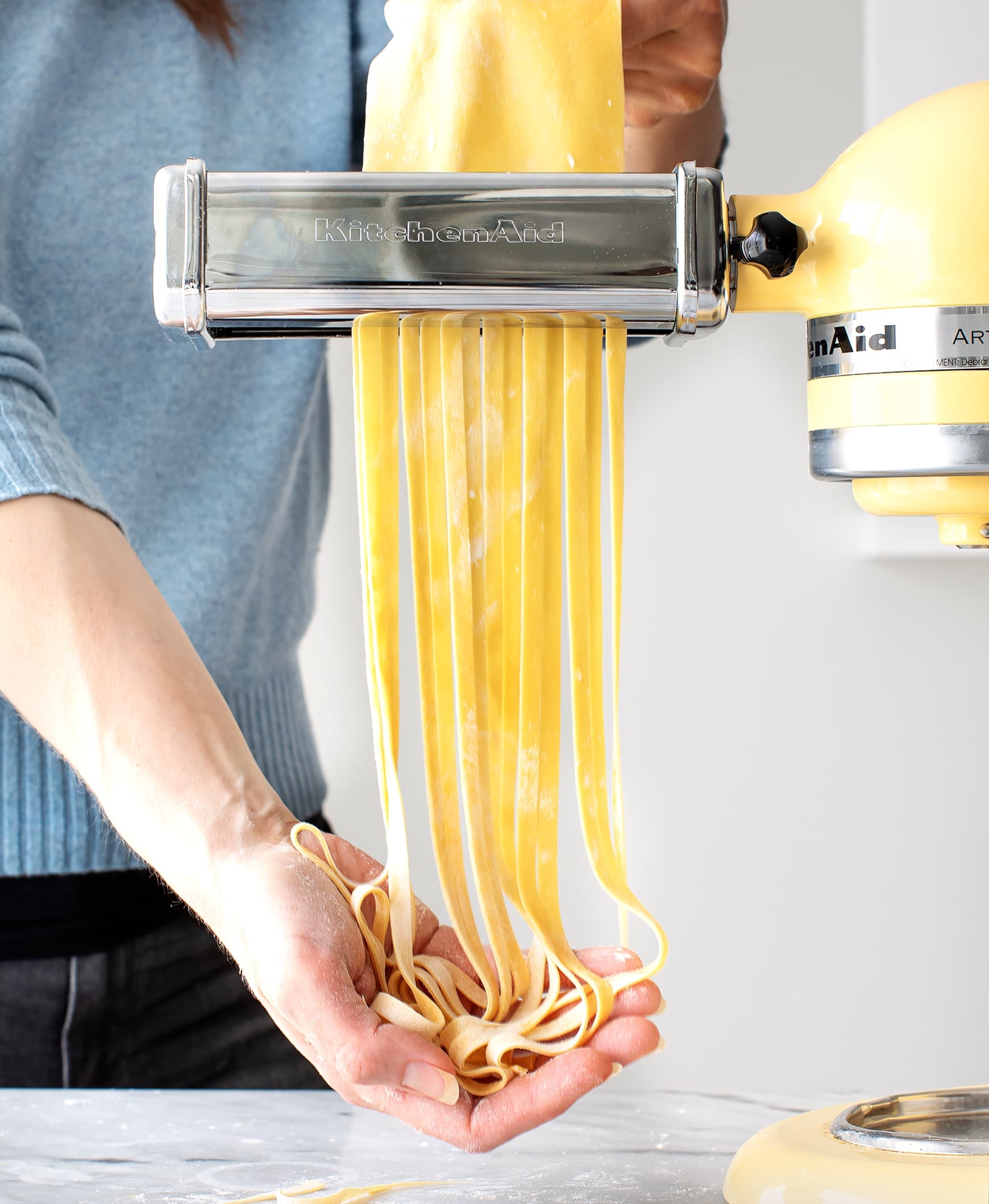
Using a Pasta Machine (Recommended for Ease): While you don't *need* special equipment to make homemade pasta, a pasta machine (either a hand-cranked manual one or an electric attachment for a stand mixer) will make your life significantly easier and help achieve consistent thickness.
- Start with the widest setting on your pasta machine. Pass one flattened dough portion through.
- Fold the dough in half or thirds, rotate it 90 degrees, and pass it through the widest setting again. Repeat this step 2-3 times. This helps further smooth out the dough and create perfectly straight edges.
- Gradually reduce the thickness setting on your machine, passing the dough through each setting once or twice. Lightly dust the dough with flour as needed between passes to prevent sticking.
- Continue this process until you reach your desired thickness. For most common pasta shapes like fettuccine or tagliatelle, a setting of 5 or 6 (on a scale of 1-7 or 1-9) is usually ideal – thin enough to be translucent but still strong.
Hand-Rolling (The Traditional Challenge): If you don't have a pasta machine, don't despair! You can absolutely roll pasta by hand with a good, heavy rolling pin. This method requires more elbow grease and practice to achieve an even thickness. Dust your work surface liberally with flour, place a dough portion in the center, and roll it out from the center outwards, rotating the dough frequently. Aim for a thickness similar to a thin piece of cardboard – or as thin as you can possibly get it without tearing.
Shaping Your Pasta: Once your pasta sheets are rolled to the desired thickness, it's time to cut them into your favorite shapes!
- For long noodles (fettuccine, tagliatelle, pappardelle): Lightly dust your pasta sheet with flour. Gently fold the sheet into a loose roll, or accordion-fold it into several layers. Using a sharp knife, slice the dough into strips of your desired width (e.g., 1/4 inch for fettuccine, wider for pappardelle). Unfurl the cut noodles and toss them lightly with a little more flour to prevent sticking.
- For lasagna or ravioli: Simply leave your pasta sheets as is, or cut them into the appropriate size rectangles or squares for your dish.
- For shapes like spaghetti or linguine: Many pasta machines come with cutting attachments that make this incredibly easy.
Cooking Your Fresh Pasta: Fresh pasta cooks significantly faster than dried pasta. Bring a large pot of heavily salted water to a rolling boil. Add your fresh pasta and cook for just 2-4 minutes, or until it's perfectly *al dente* (tender but with a slight bite). Drain quickly and serve immediately with your favorite sauce – from a simple Pomodoro to a rich Bolognese Ragù or a fresh pesto.
